
Qinyu ZHOU
周沁宇
Ph.D Candidate
Department of Aeronautical and Aviation Engineering
The Hong Kong Polytechnic University
Origin
Pudong, Shanghai, China
Research Interest
Human factors and ergonomics
Safety engineering
Motion sickness mitigation design for electric vehicles
上汽乘用车合作项目:飞凡F7舒享模式开发
This research topic is funded by:
上海汽车集团股份有限公司,电动轿车防晕车功能开发,2022-09 至2023-09;
基于智舱关联与大数据识别的智慧舒享功能开发与验证,2022-12 至 2024-04。
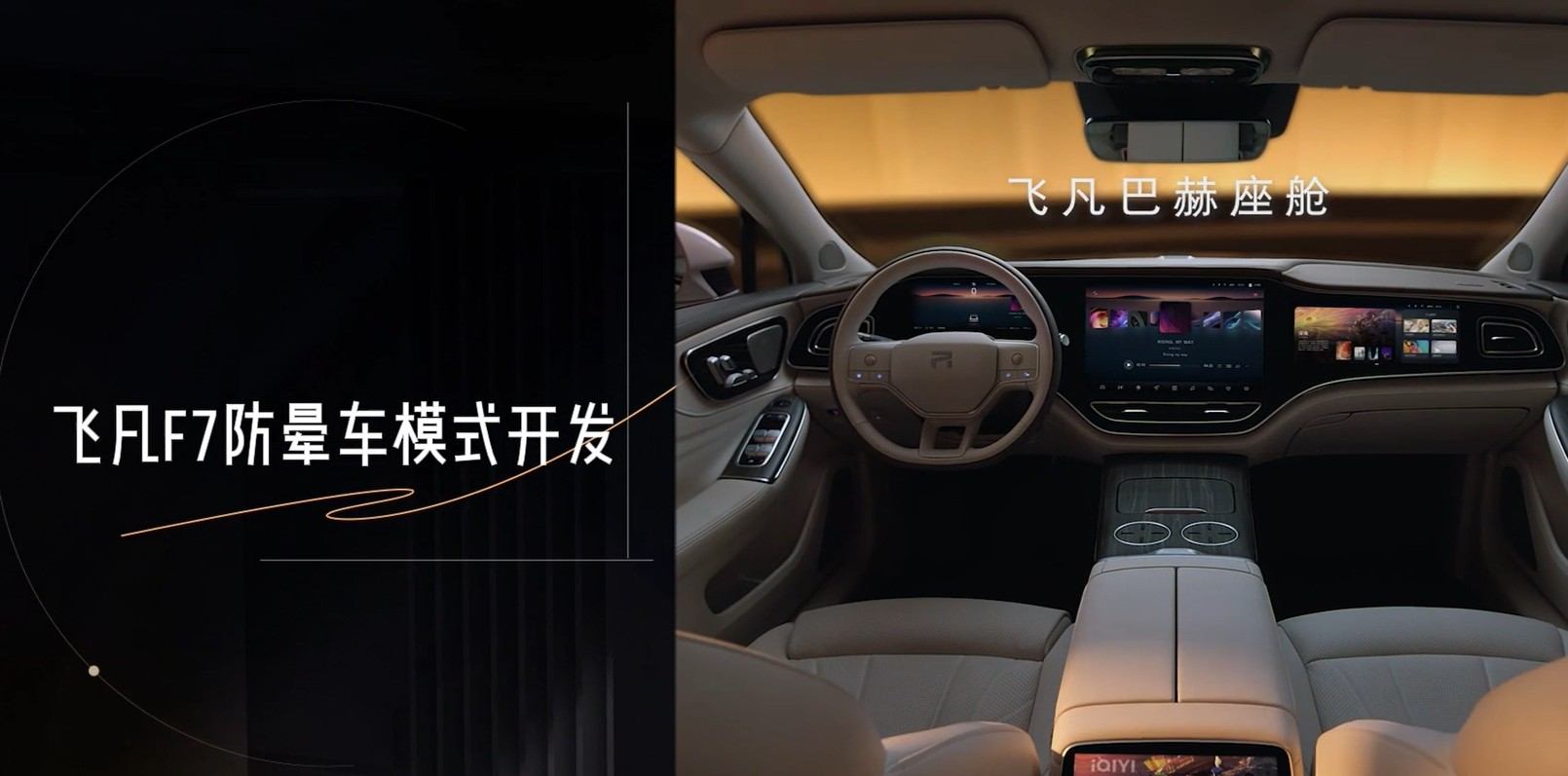
Development of motion sickness mitigation system for FEIFAN F7
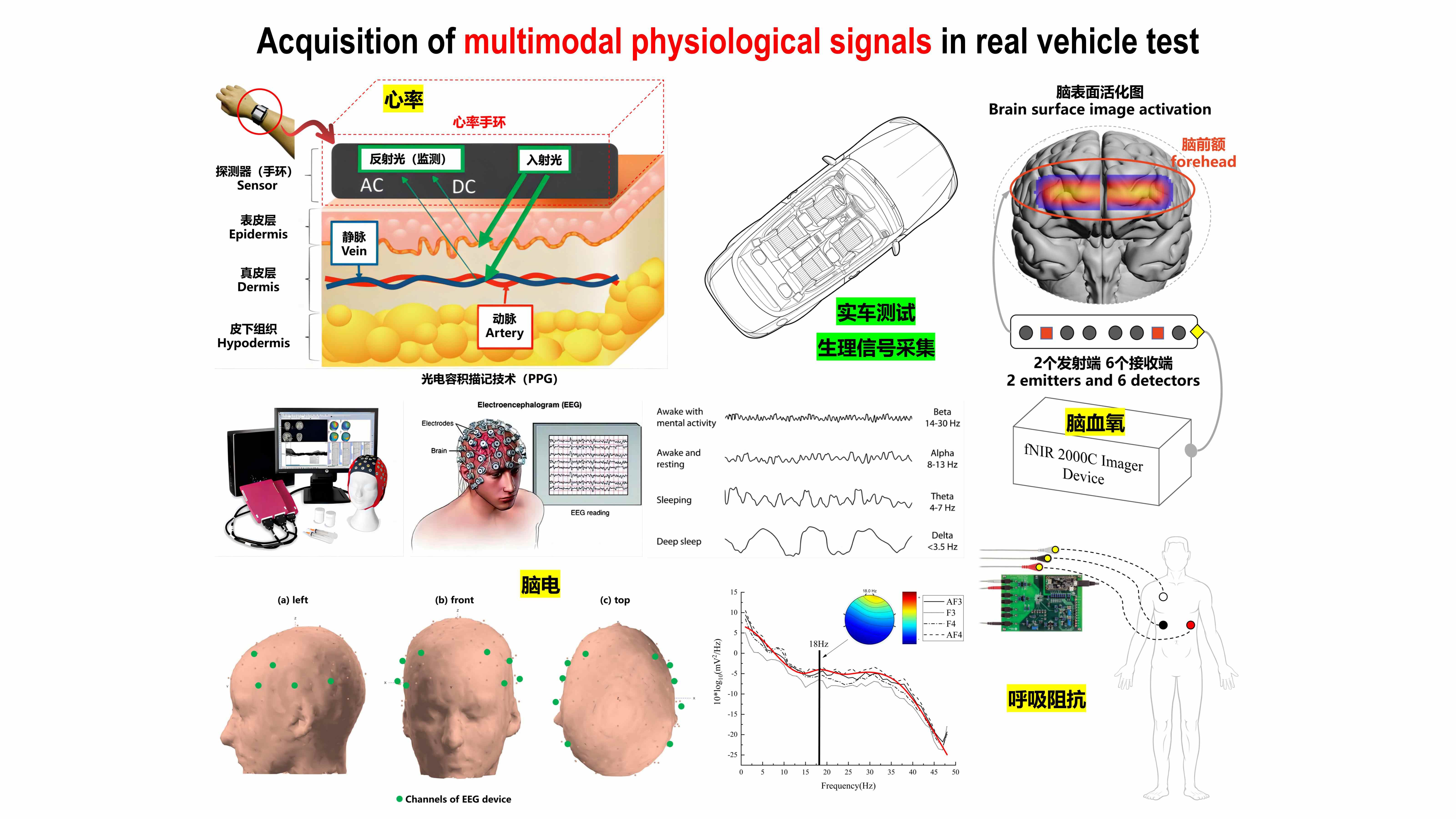
Multimodal physiological signals acquisition from real vehicle test
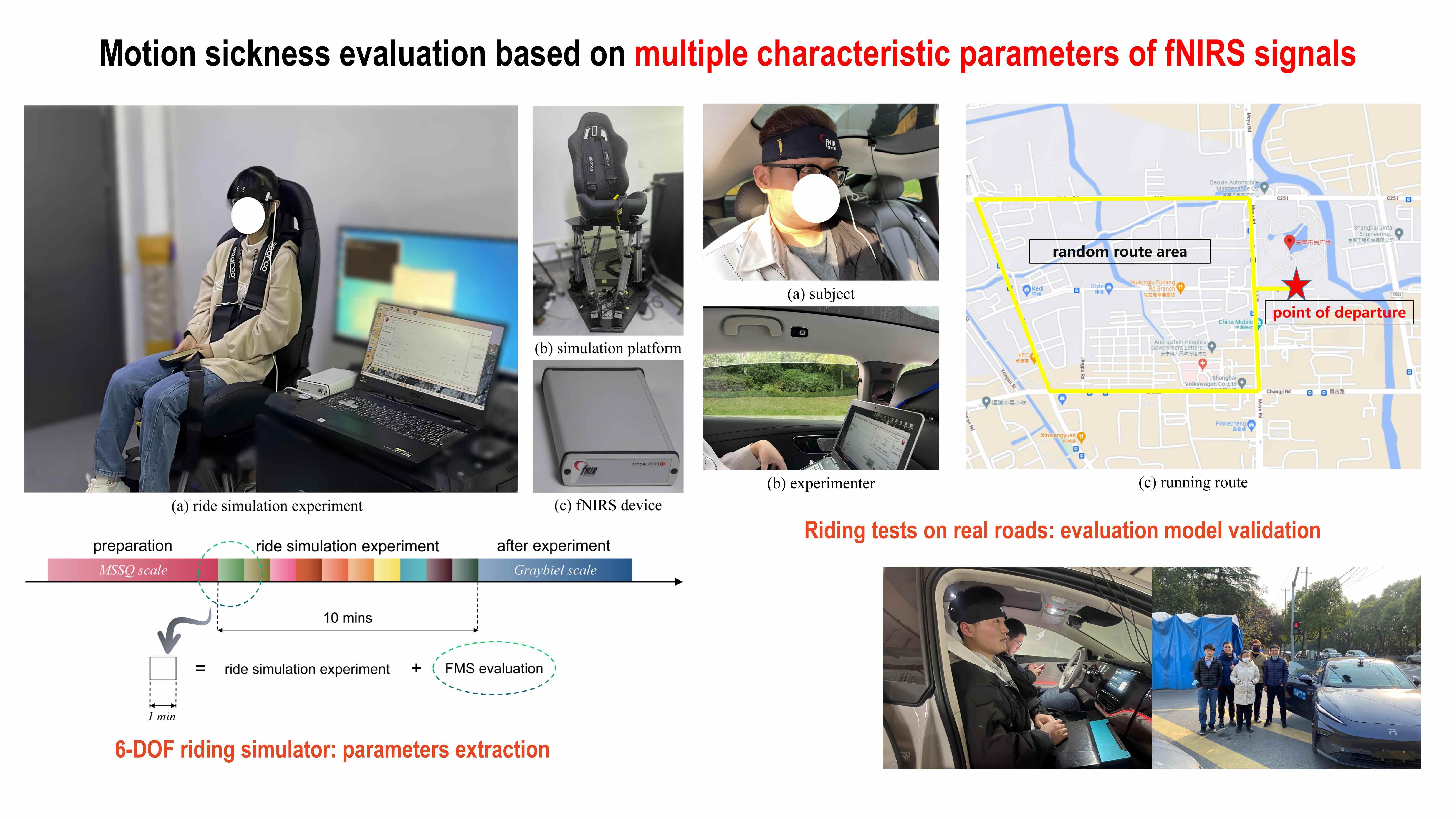
(1) Background: after motion sickness occurs in the ride process, it is easy to cause the passengers to have a poor mental state, cold sweat, nausea, and even vomiting symptoms. This study proposes to establish the association model between motion sickness level (MSL) and cerebral blood oxygen signals during the ride; (2) Methods: a riding simulation platform and the functional near-infrared spectroscopy (fNIRS) technology are utilized to monitor the cerebral blood oxygen signals of the subjects in the riding simulation experiment. The score of Fast Motion sickness Scale (FMS) every minute during the experiment is determined as the dependent variable to manifest the change of MSL. Bayesian ridge regression (BRR) algorithm is applied to construct an assessment model of MSL during riding. The score of Graybiel scale is adopted to preliminarily verify the effectiveness of the MSL evaluation model. Finally, a real vehicle test is developed, and two driving modes are selected in random road conditions to carry out a control test; (3) Results: the predicted MSL in the comfortable mode is significantly less than the MSL value in the normal mode, which is in line with expectations; (4) Conclusions: changes from cerebral blood oxygen signals have a huge correlation with MSL. The MSL evaluation model proposed in this study has a guiding significance for the early warning and prevention of motion sickness.
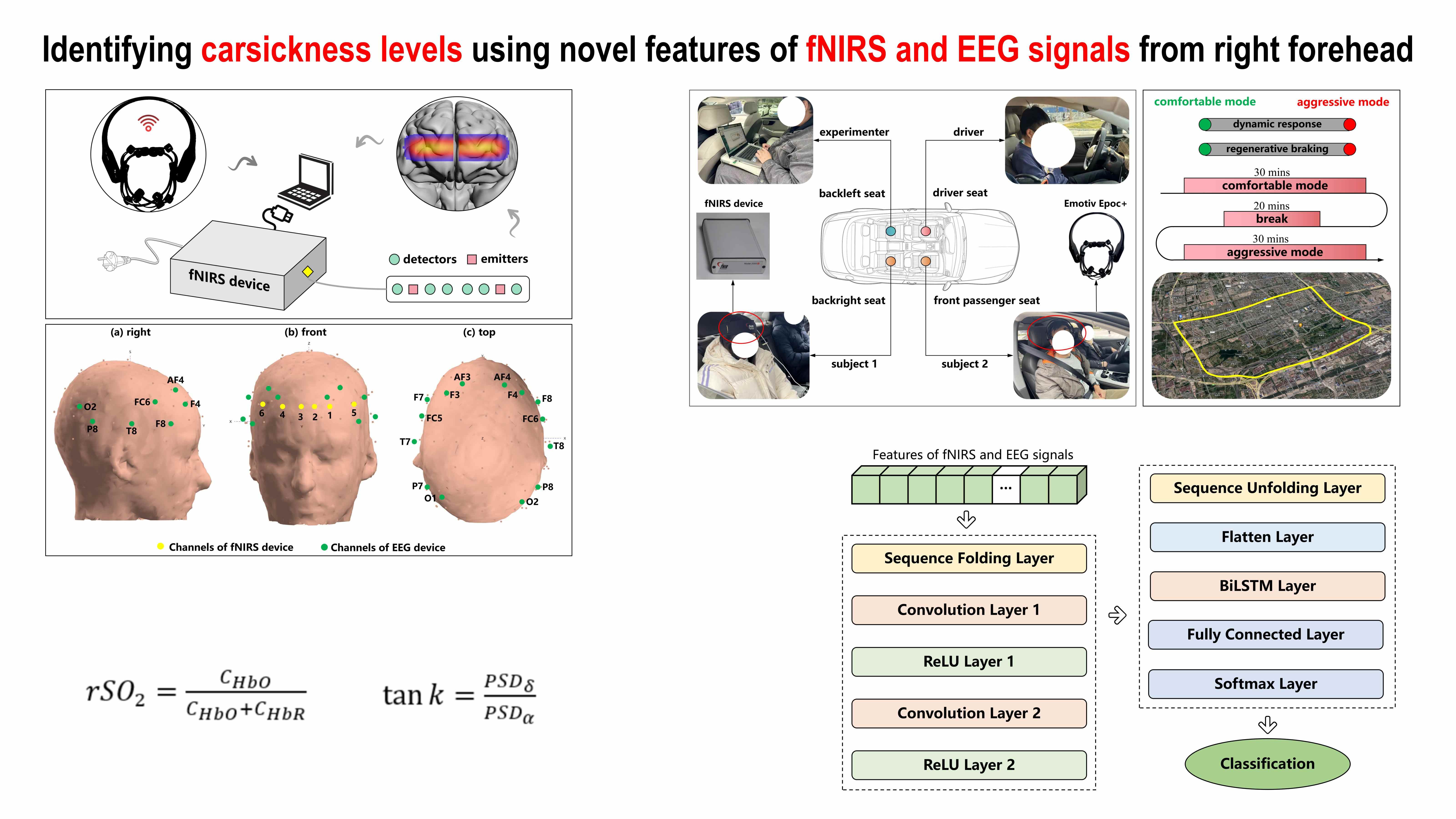
The purpose of this study is to extract novel features of functional near-infrared spectroscopy (fNIRS) signals and electroencephalogram (EEG) signals from cerebral regions associated with motion sickness to identify carsickness levels. An actual car riding experiment with two driving modes was carried out to induce real ride feeling. The fNIRS signals and EEG signals of subjects as well as the scores of Fast Motion sickness Scale (FMS) were recorded in the experiments of comfortable mode and aggressive mode. Based on the test of changes in cerebral oxygen exchange (∆COE), channel 4 from right forehead turned out to be related to carsickness levels. Based on the test of power spectral density (PSD) from delta band and alpha band, channel AF4 and F4 from right forehead were proved to be associated with carsickness levels. Then regional cerebral oxygen saturation (rSO2) and tank from right forehead were extracted as new features to recognize carsickness. To verify the validity of the new features, a classifier based on convolutional neural network combined with bidirectional long short term memory neural network (CNN-BiLSTM) was constructed to obtain the classification accuracy. The result showed that the input feature combination rSO2 and tank reached the accuracy interval of [0.75, 1], which was better than other feature combinations. This proved the effectiveness of rSO2 and tank on carsickness recognition, providing new parameters for carsickness levels identification and prevention of emergency carsickness.
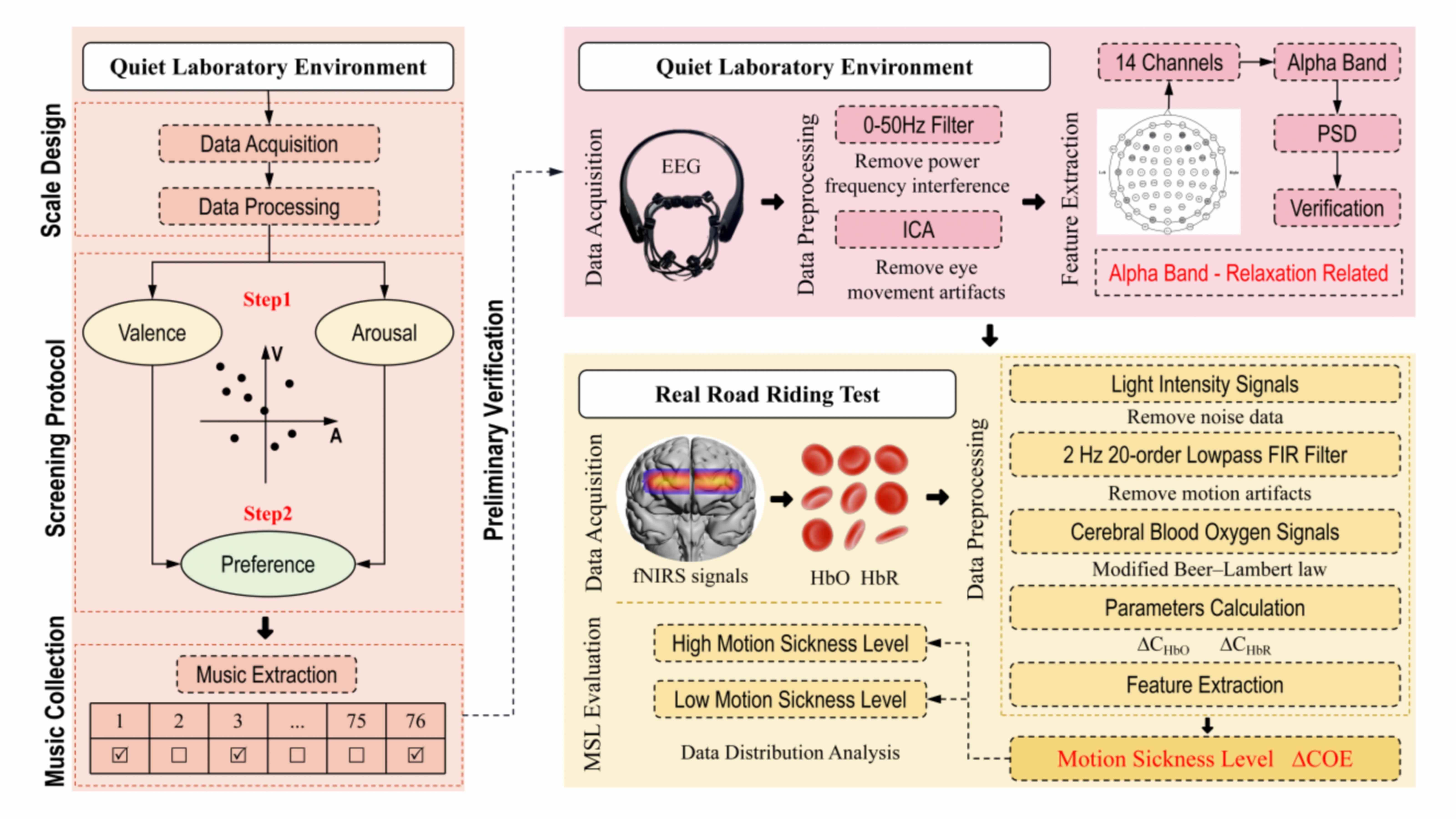
Development of music intervention for motion sickness mitigation
Motion sickness is a common complaint from the passengers after riding. This study intended to propose a motion sickness alleviating method through constructing and applying a music collection. The construction of the music collection was divided into two steps. The selection of the music was first based on valence and arousal. In this study, the preference of the music was then considered as an important factor in the second step. To first validate the soothing effect of the music collection, power spectral density (PSD) of alpha band from electroencephalograph (EEG) was extracted and illustrated through data distribution. For further validation of the motion sickness soothing effect, a real road riding test was conducted and the functional near-infrared spectroscopy (fNIRS) signals and the score of Fast Motion Sickness Scale (FMS) of the passengers were recorded. Regional cerebral blood saturation (rSO2) was extracted from the fNIRS signals to quantify the motion sickness levels of the passengers. The result showed that there was a significant difference between the FMS score of the control group and the music collection group (P=0.024<0.05) and there was also a significant difference between the rSO2 parameter of the control group and the music collection group (P=0.000<0.05), indicating that music selected from the valence-arousal-preference (VAP) protocol had a positive effect on alleviating motion sickness.
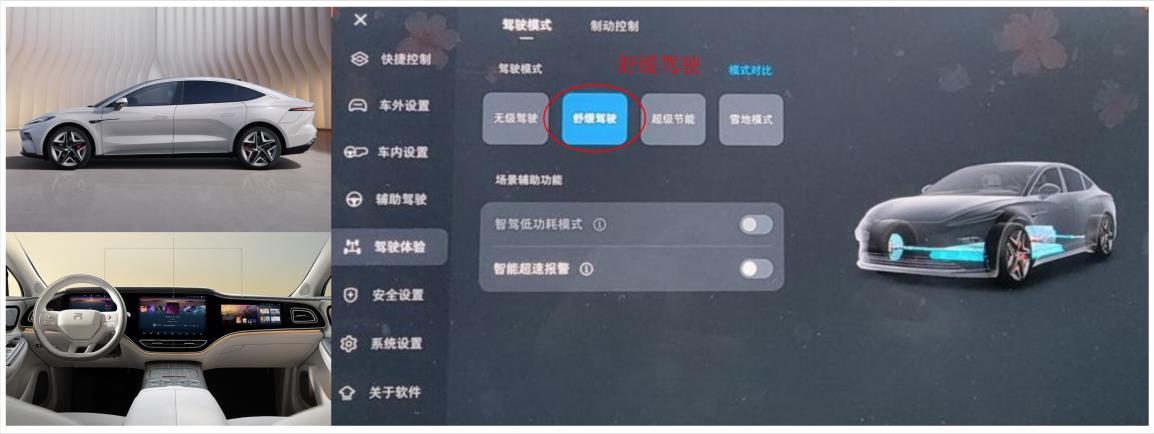
飞凡F7中控系统:驾驶体验-舒缓驾驶模式
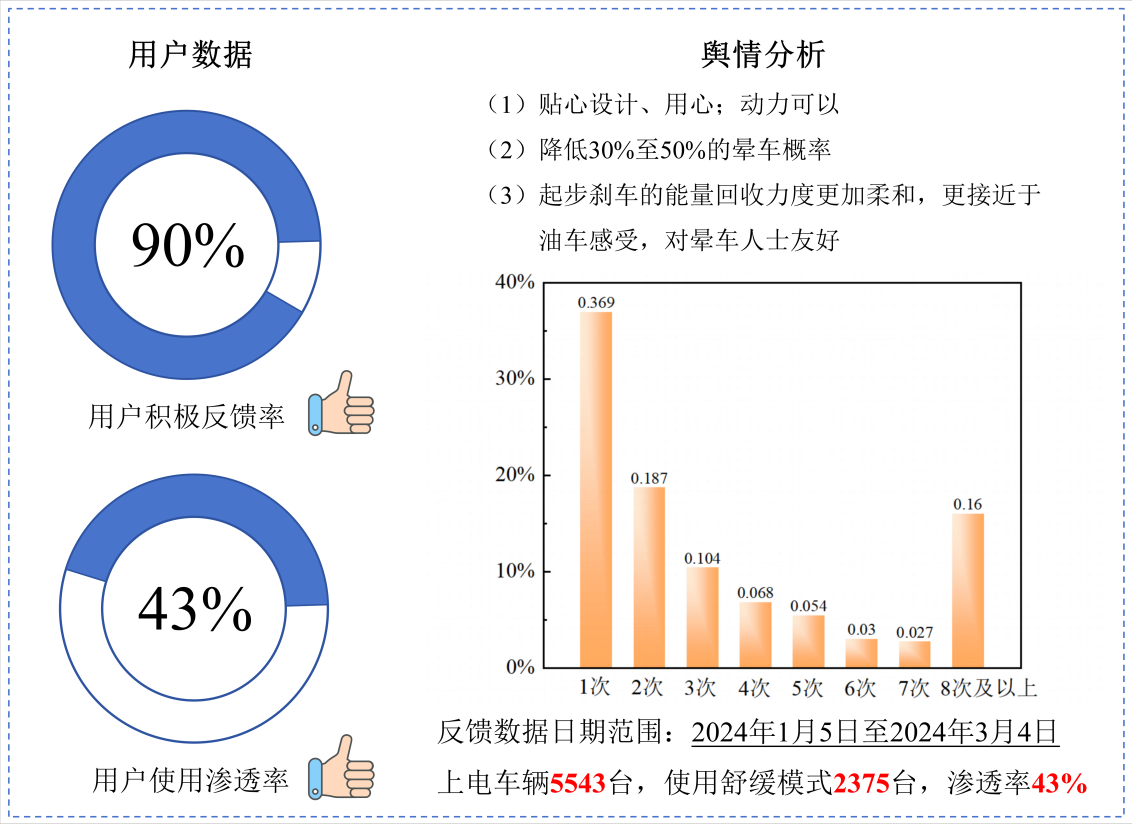
飞凡F7第一轮销售反馈数据:2024年1月5日至2024年3月4日
For detailed information and work on this project, please reach to the following thesis.
周沁宇.基于主客观融合的晕车程度评价体系构建与电动汽车防晕车功能测试[D].上海大学,2024.
DOI:10.27300/d.cnki.gshau.2024.001189.